

Matchup Examples
Common matchup calc examples
Concrete examples of turning frequent matchups into Calc inputs—how to assume sets, which numbers to read, and what to try next.
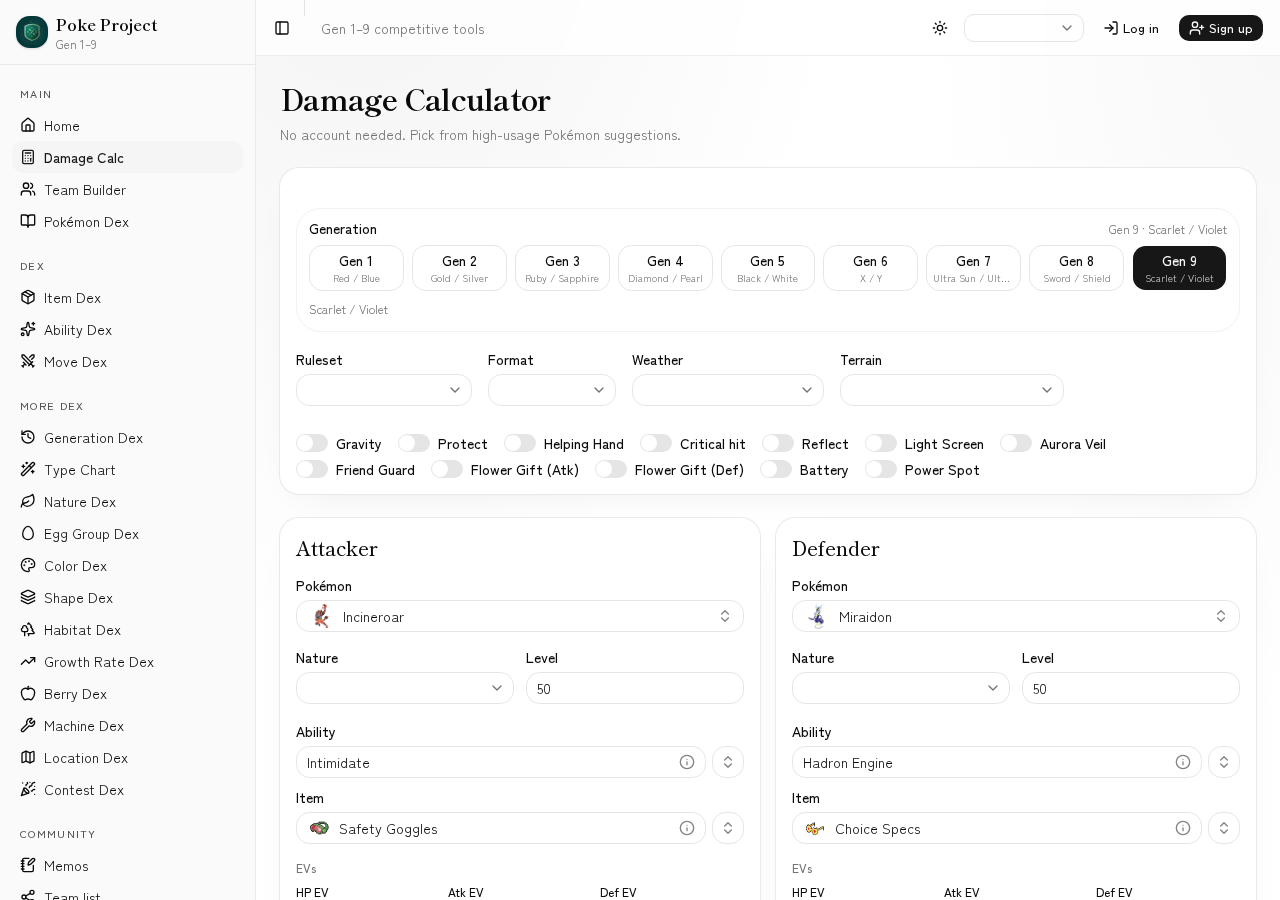
Assume the threat’s set (EVs, item, moves) first.
Tera can flip the same matchup.
Link results into Team Builder or the board.
Basic flow
- 1Example 1: Fast STAB attacker → bulky Pokémon (survive / KO without crit).
- 2Example 2: Setup attacker (+1–+2) → check (still survives after boosts?).
- 3Example 3: Special attacker → specially defensive check (recalc with item/Tera).
- 4Share interesting results and retry with alternate set assumptions.
Tips
- •If the set is unknown, try 2–3 common sets for comparison.
- •Open base stats and type chart before returning to Calc to tighten assumptions.
- •See “How to read Gen 9 damage calc” and “How to bulk EV train” for next steps.
FAQ
- What if I don’t know the opposing set?
- Calc 2–3 common sets and separate lines that stay stable from ones that flip.
- How should I share calc results?
- Use a Calc share link so conditions travel with the numbers. Paste it on the board or team description.
Related guides
- How to read Gen 9 damage calcLearn damage ranges, percentages, rolls, and OHKO/2HKO counts. A guide to reading Scarlet/Violet singles results for real matchup decisions.
- How to bulk EV trainSteps to set H/B/D EVs against a hypothetical move. Find the “survives” line in Calc and turn it into an efficient bulk spread.
- Doubles calc checklistIn doubles, ally boosts, spread moves, and Protect change results a lot. Notes on easy-to-miss settings and how doubles differ from singles.
- How to use Damage CalcRun Gen 1–9 singles/doubles damage calculations with @smogon/calc. Switch between Standard and Champions rules, and set weather, terrain, screens, and more.