

Speed tiers
How to use Speed comparison
Compare your Pokémon’s Speed to common base-Speed tiers and Pokémon you add, and see the investment needed to outspeed.
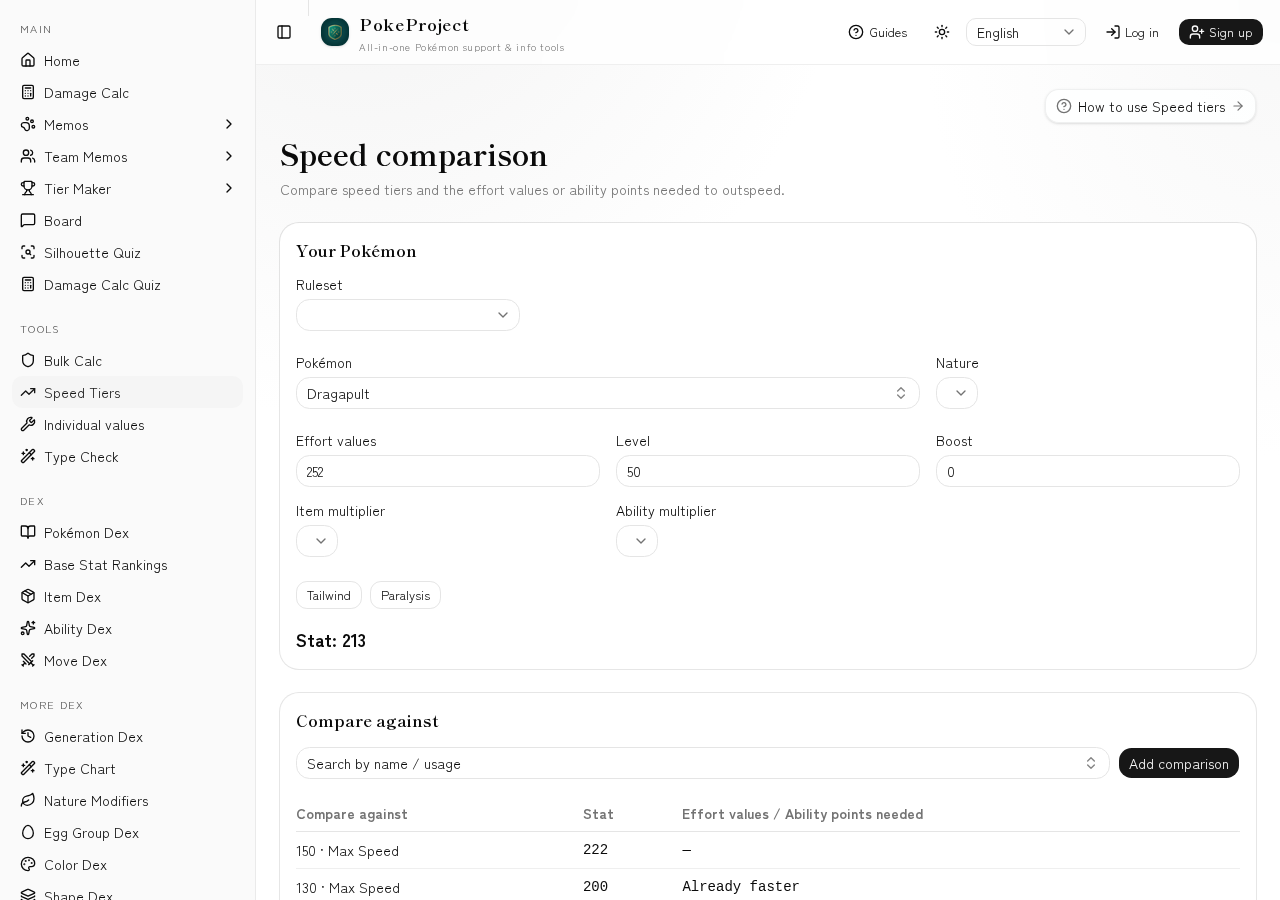
Set your nature, Effort values (or Ability Points), stages, item/ability multipliers, Tailwind, and paralysis.
Common base-Speed tiers appear by default; add Pokémon to compare (assumed max Speed).
Chips show 0 Spe, 4 Spe, the outspeed line, and max investment with the resulting Speed.
Basic flow
- 1Open Tools → Speed comparison in the sidebar.
- 2Enter your Pokémon, nature, and investment, then check your Speed.
- 3Add comparison Pokémon if needed.
- 4On each card, read the difference and the investment chips to outspeed.
Tips
- •Keep the default tiers and only add the opponents you care about.
- •After bulk adjustment leaves Speed Effort values, confirm the cut here.
Related guides
- How to read Gen 9 damage calcLearn damage ranges, percentages, rolls, and OHKO/2HKO counts. A guide to reading Scarlet/Violet singles results for real matchup decisions.
- How to use Bulk adjustmentUse the dedicated bulk tool to find H/B/D Effort values against a threat move. Search the survival line for your defender.
- How to use Individual value calcNarrow Individual-value ranges from level and stats. Handy while training or estimating an opponent’s Individual values.
- How to use Type checkDiagnose defensive typing and matchups against common meta threats. Also available from the Team Memos threat panel.
- Doubles calc checklistIn doubles, ally boosts, spread moves, and Protect change results a lot. Notes on easy-to-miss settings and how doubles differ from singles.
- Common matchup calc examplesConcrete examples of turning frequent matchups into Calc inputs—how to assume sets, which numbers to read, and what to try next.
- How to use Damage CalcRun Gen 1–9 singles/doubles damage calculations with @smogon/calc. Switch between Standard and Champions rules, and set weather, terrain, screens, and more.